
Last update Thursday, 28 May, 2026
✡️ The Jewish Massacre of Seville in 1391
The history of Seville’s Jewish quarter experienced one of its most tragic episodes in 1391, when a wave of anti-Jewish violence led to a true massacre in the city.
Those events deeply marked the history of Seville, transformed the life of the Hebrew community forever and had decisive consequences for the future of the Jews throughout the Iberian Peninsula.
⚠️✡️ Key points about the massacre of 1391
- 🔥 Radical preaching – Archdeacon Ferrán Martínez spread violent sermons against the Jews of Seville, accusing them of harming the kingdom and attacking the Christian faith.
- 🏛️ Political weakness – The death of John I and the minority of Henry III created a situation of instability that made it difficult to control the conflict.
- ⚔️ Assault on the Jewish quarter – On 6 June 1391, mobs attacked the Sevillian aljama. Thousands of Jews were killed and many homes were looted.
- 🩸 A major massacre – Sources speak of around 4,000 Jews killed during the attack on Seville’s Jewish quarter.
- ⛪ Conversion of synagogues – After the massacre, some synagogues were transformed into Christian churches, such as Santa Cruz and Santa María la Blanca.
- 🌍 Historical consequences – The violence in Seville later spread to other cities in Castile and Aragon, causing forced conversions, emigration and the destruction of many Jewish communities.
The massacre of 1391 marked a before and after for Seville’s Jewish community and remains one of the most dramatic episodes in the medieval history of the city.
-
🔴 Discover Jewish Seville with a specialist guide
- ✡️🏛️ Route through the old Jewish quarter of Seville
Discover the history of Seville’s Hebrew community, its synagogues, historical figures and the events of 1391 with specialised guided tours. - 👨🏫✨ Private themed tours
We organise tours about Jewish Seville, conversos, the Inquisition and coexistence between cultures in the medieval city. - 📩💬 Information and bookings
You can contact us by email 📧 or WhatsApp 💬.
⚖️ A climate of growing tension
At the end of the 14th century, the Jewish community of Seville was one of the most important in Castile. Jews played an active role in trade, finance, crafts and the economic administration of the kingdom.
However, there was also a growing climate of hostility fuelled by religious, economic and social tensions.
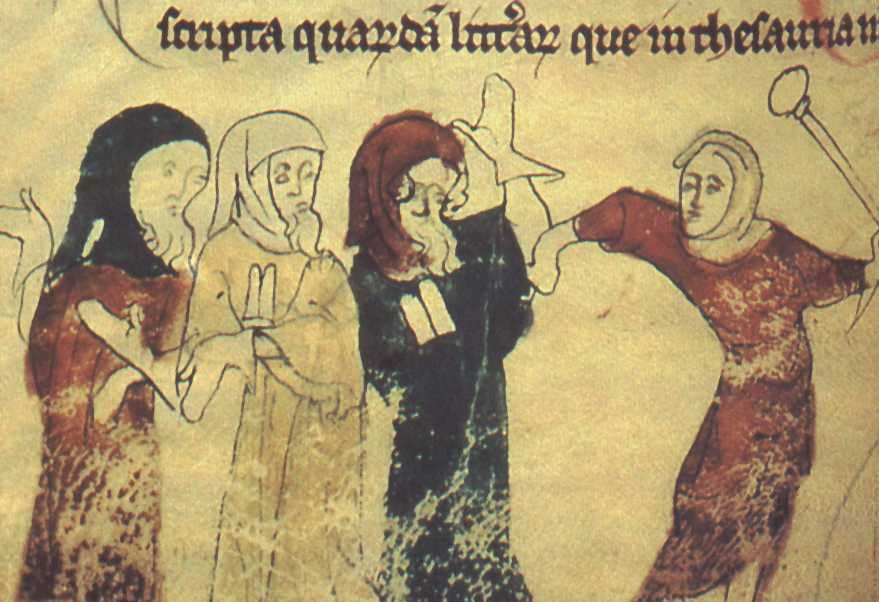
In this context, the figure of the Archdeacon of Écija, Ferrán Martínez, became especially important. He began to deliver extremely aggressive sermons against the Jews of Seville.
His speeches denounced:
- ✡️ the persistence of the Jewish religion
- 💰 Hebrew economic activity
- ⚠️ alleged financial abuses
These sermons progressively increased popular tension in the city.
🔥 The outbreak of violence
The political situation of the kingdom favoured the deterioration of public order. After the death of King John I, the new monarch Henry III was still a minor, and Castile was going through a period of great instability.
The municipal authorities of Seville had expressed concern about Ferrán Martínez’s preaching, but they failed to prevent the atmosphere from becoming increasingly radicalised.
The tension accumulated over months finally exploded violently in June 1391.
On 6 June, large groups began moving towards Seville’s Jewish quarter. Mobs attacked the houses and streets of the aljama, while looting and killings took place.
Sources describe scenes of enormous brutality:
- ⚔️ mass killings
- 🏠 destruction of homes
- 🔥 looting
- 👨👩👧 deaths of men, women and children
It is estimated that around 4,000 Jews died during the massacre.
🏛️ The failure of the authorities
The authorities initially tried to control the riots. The Count of Niebla and other city officials attempted to arrest some of the agitators.
However, the crowd reacted violently, and the representatives of power eventually withdrew, fearing that the situation would spiral even further out of control.
The inability to stop the assault allowed violence to spread throughout the Jewish quarter.
⛪ Synagogues converted into churches
After the destruction of much of Seville’s Jewish community, several synagogues were converted into Christian churches.
Among them, the most notable were:
- ⛪ Santa María la Blanca
- ⛪ Santa Cruz
The old Jewish quarter was profoundly transformed, and the Hebrew presence in Seville never again recovered the strength it had previously enjoyed.
The massacre of 1391 marked the beginning of the definitive decline of one of the most important Jewish communities in the Iberian Peninsula.
🌍 Consequences for the whole Iberian Peninsula
The violence that began in Seville later spread to many cities in Castile and Aragon:
- 📍 Córdoba
- 📍 Toledo
- 📍 Valencia
- 📍 Burgos
- 📍 Barcelona
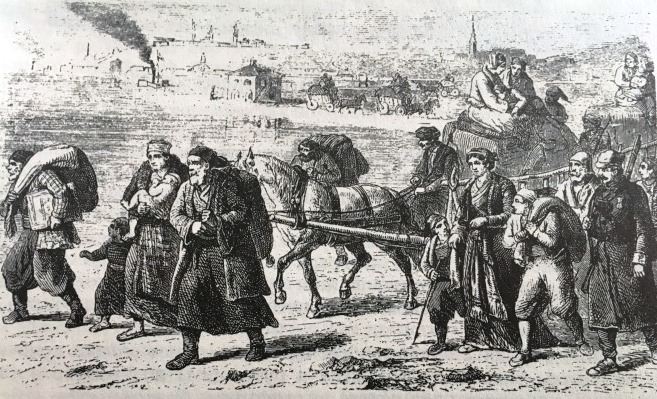
Thousands of Jews were killed, many others fled, and a large number accepted baptism in order to save their lives.
These forced conversions gave rise to a new social reality: the conversos or New Christians, a phenomenon that is essential for understanding the later history of Spain.
🏚️ The economic and urban impact
The destruction of Jewish communities also had enormous economic consequences.
Many workshops, businesses and commercial networks disappeared after the attacks.
Medieval sources describe how markets that had once been full of activity became empty, and how the Crown lost important tax revenues from the Jewish aljamas.
Medieval Seville thus lost a fundamental part of its economic and cultural fabric.
✡️ The history of the massacre of 1391 remains today one of the most important episodes for understanding the evolution of medieval Seville, the birth of the converso phenomenon and the complex relationships between religions and communities in the history of Spain.
Leave a Comment